
Checked 19 October 2026
Display pieces and shop-floor stock: goods that spent time in front of people
One was chosen to be looked at, the other was there to be picked up. Both are usually new in construction and used in small, specific ways.
Display and shop-floor stock on the scale
On the condition scale, 展示品 (display piece) usually covers the zone "Handled: shot, tried on or shown". The four points below are the short version of this page; the sections after them go into each one.
Shop-floor stock, the second label on this page, usually sits a little lower, between "New, wrapping or tags disturbed" and "Handled: shot, tried on or shown".
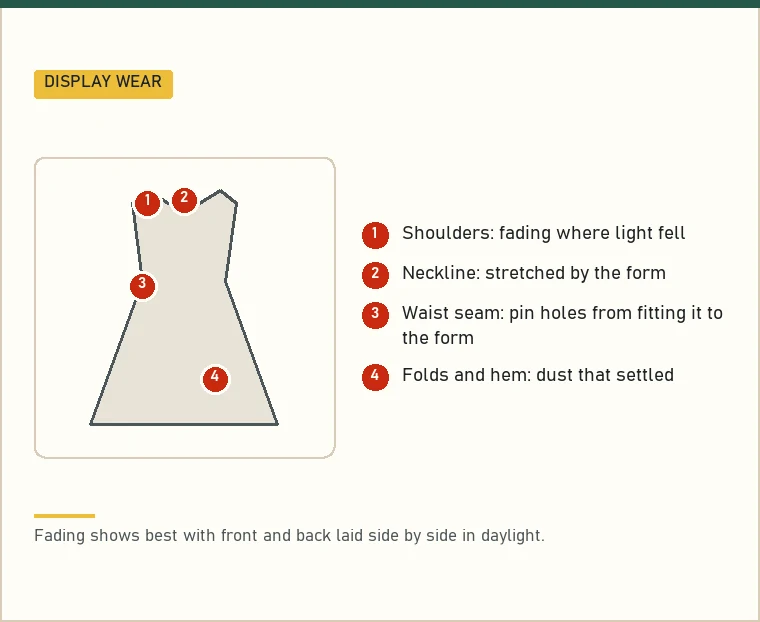
What usually differs. A unit that stood on a mannequin, in a window or on a stand. Typical traces: light fading on shoulders or on the side that faced out, dust in folds, a neckline stretched by the mannequin, small pin or tag holes.
What the CNFans defect check tends to do. Compare the disclosed display condition with the received unit, including visible fading or damage. Ask about unresolved differences; describing an item as display stock does not establish that all wear was disclosed or accepted.
Photos that show it. Daylight photos of front and back side by side (fading shows as a difference between them), the neckline laid flat, and close-ups where pins or security tags went.
Questions before you pay. How long was it on display, and was it in sunlight? Any fading, pin holes or stretching? Do the original tags and bag come with it?
Display pieces and shop-floor stock
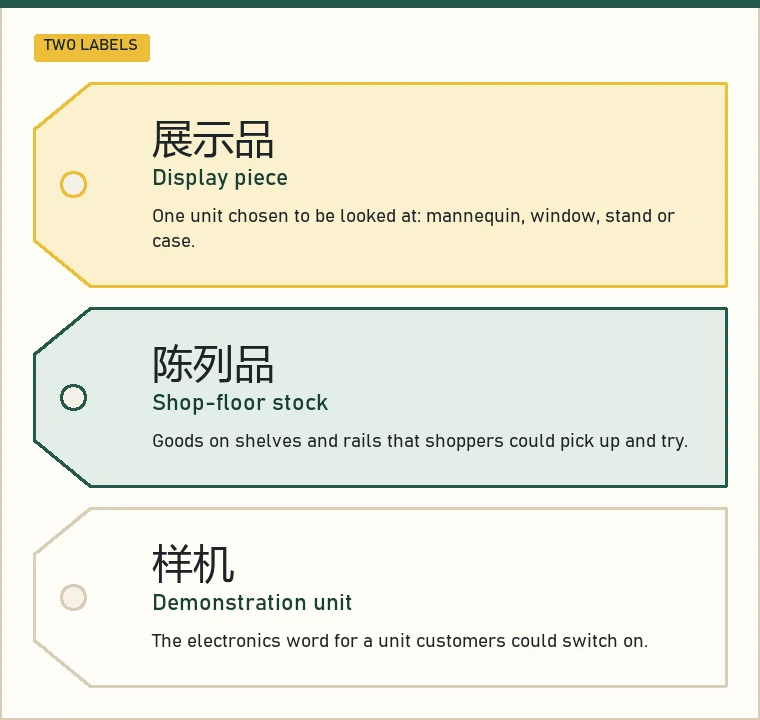
Two labels describe goods that spent time in front of people, and they are not quite the same. 展示品 is a display piece: one unit that stood on a mannequin, in a window, on a stand or in a glass case, chosen to be looked at. 陈列品 is shop-floor stock: goods merchandised on shelves and rails where shoppers could pick them up, unfold them and take them to a fitting room.
The difference shows in the kind of wear. A display piece usually has one dominant story, such as light, dust or the shape of the mannequin, and it is often a single unit. Shop-floor stock has many small stories from many hands, and there may be several units with slightly different histories. Electronics have a third word, 样机, for a demonstration unit that customers could switch on; it belongs to the same family.
On the condition scale, shop-floor stock sits between "wrapping or tags disturbed" and "handled", while a display piece sits firmly in the handled zone.
Light, dust and a mannequin's shoulders
Display wear follows the display. A garment in a shop window gets sunlight on one side, and dyes fade first on shoulders, the top of the sleeves and whatever faced the glass. The fade is easy to miss in a photo of the front alone; it shows when the front and back are laid side by side in daylight.
A mannequin leaves its own marks. Necklines stretch over a head that is larger than a real neck, shoulders take the shape of the form, and pins hold back excess cloth along seams or at the waist. Security tags leave a small hole or a pressed ring. Dust settles into folds and onto the top surfaces, and it usually washes out, while fading does not.
A display piece is often sold with its original tags missing or loosely reattached, because tags get removed for a cleaner look on the mannequin. That is worth knowing if the tags matter to you.
Hands, fitting rooms and folding tables
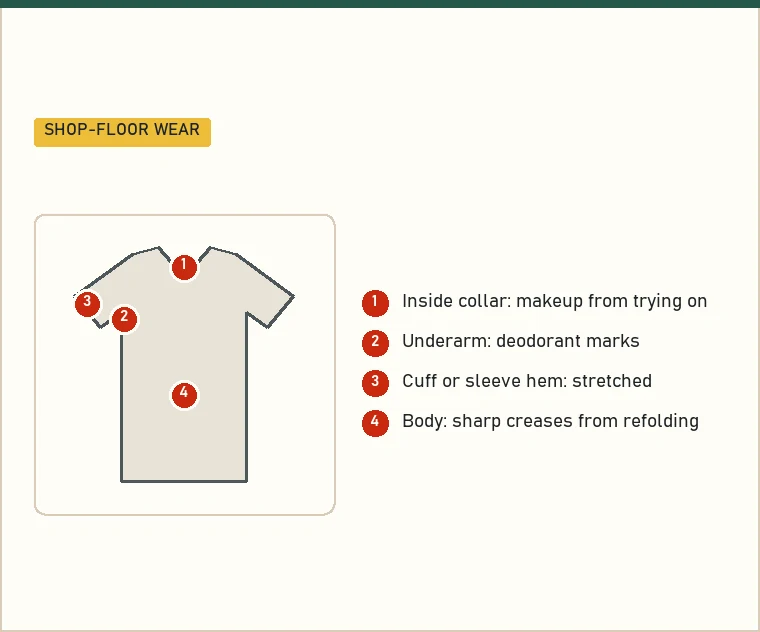
Shop-floor stock carries the marks of being handled rather than displayed. Folding and refolding leaves sharp creases along the same lines. Trying on leaves faint makeup on the inside of collars, deodorant marks under the arms, stretched cuffs and, on knitwear, a little pilling where a bag strap rubbed. Hangers can push small bumps into the shoulders of knits.
A display item may be missing packaging, tags or accessories, but absence can have several causes. Ask what is included and request a photo of the actual contents. A missing label may also remove information you need; it is not only a presentation issue.
Handling marks are faint, which makes them the hardest thing for a few warehouse frames to catch. The clearer the seller's photos of collar and underarms before you pay, the less you depend on the check afterwards.
Tags, bags and the bits that go missing
Both labels often come with something missing. Display pieces lose swing tags and sometimes the brand label is cut for a cleaner window. Shop-floor stock loses outer bags, spare buttons and the small envelope of extra thread. Belts are separated from trousers, hoods from jackets with detachable hoods, and the second piece of a set can end up on a different rail.
Ask for a list of what comes with the piece rather than assuming the full set. For anything that normally ships with parts, such as a detachable hood, a belt or a lining, ask for a photo with all the parts laid out together. It is one photo, and it saves the most common complaint about display stock: that something is not there.
Questions for anything that was on show
For a display piece: how long was it on display, and in sunlight? Any fading, pin holes or stretching? Do the original tags and bag come with it? For shop-floor stock: was it tried on? Are all tags attached? Any marks at collar or underarms? Is the outer bag included?
When the CNFans warehouse photos arrive, look first at what the seller said would be there. Fading and missing parts are easy to see in a photo; faint makeup marks are not, so a clear close-up from the seller before payment is worth more than hoping the warehouse frames catch it.