
Checked 19 October 2026
Sample garments: made for a shoot or a fitting, then sold on
A sample is the first version of a garment and the one that worked hardest. It can be a bargain, as long as you know which differences come with it.
Where samples land on the condition scale
On the condition scale, 样衣 (sample garment) usually covers "Handled: shot, tried on or shown" to "A named fault, often a single piece". The four points below are the short version of this page; the sections after them go into each one.
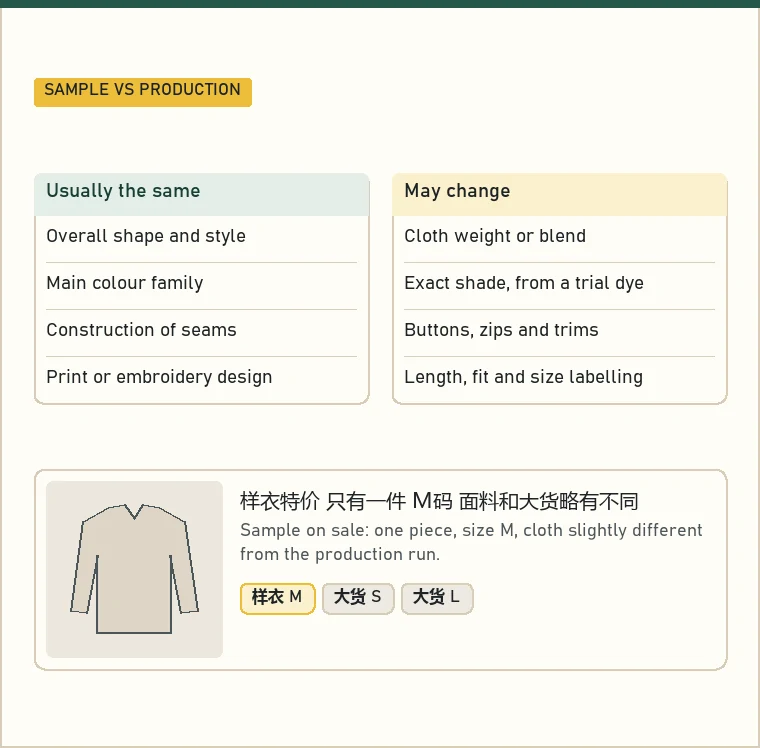
What usually differs. Made before or alongside the production run for a shoot, a fitting or a showroom, so it can differ from what was finally sold: cloth, trims, colour, even size, since samples tend to come in one sample size. Pins, chalk lines, a handwritten tag or shoot wear are common.
What the CNFans defect check tends to do. Identify which differences from production stock were actually described for this sample. Ask about any new discrepancy; the word sample is not blanket acceptance of every defect or a statement about refund eligibility.
Photos that show it. Shots of this unit rather than the catalogue images: the inside of collar and cuffs, the care label (samples often lack one) and the main seams.
Questions before you pay. Was it worn on a shoot or only fitted? Does it differ from the production version in cloth or trims? What does it measure, whatever the label says? Any pins, marks or missing labels?
Garments made for a photo shoot
样衣 is a sample garment. It is made before or alongside the production run, for one of three jobs: to be photographed for the listing, to be fitted on a person so the pattern can be corrected, or to hang in a showroom for buyers to handle. Once that job is done the sample has no further use to the seller, and it is sold off, often cheaply and often as 样衣清货 or 样衣特价.
A sample may differ from production stock in size, construction or condition. Ask what makes it a sample, request its actual measurements and verify which details are final. Do not assume that a sample label means a particular size or a unique physical item.
On the condition scale a sample sits in the handled zone or beyond, because two separate things can be different about it: what it has been through, and what it was made from.
How a sample can differ from the production piece
A sample is a draft. Between the sample and the production run, a seller may change the cloth to a cheaper or better one, swap buttons or zips, adjust the length or the fit, or drop a detail that cost too much to make in quantity. None of that is a fault, and none of it is necessarily disclosed, because the seller may not remember which sample came before which change.
In practice the differences that matter most are cloth weight, colour and size. Cloth can be lighter or heavier than the production piece shown elsewhere on the listing. Colour can be from a trial dye. Size can be marked with a sample tag, a handwritten label, or nothing at all, in which case the size letter in the title is the seller's best guess.
If the listing shows production photos and sells the sample underneath, ask whether the sample matches those photos in cloth and trims. The honest answer is sometimes "almost", and that is worth knowing before you pay.
Traces a shoot or a fitting leaves
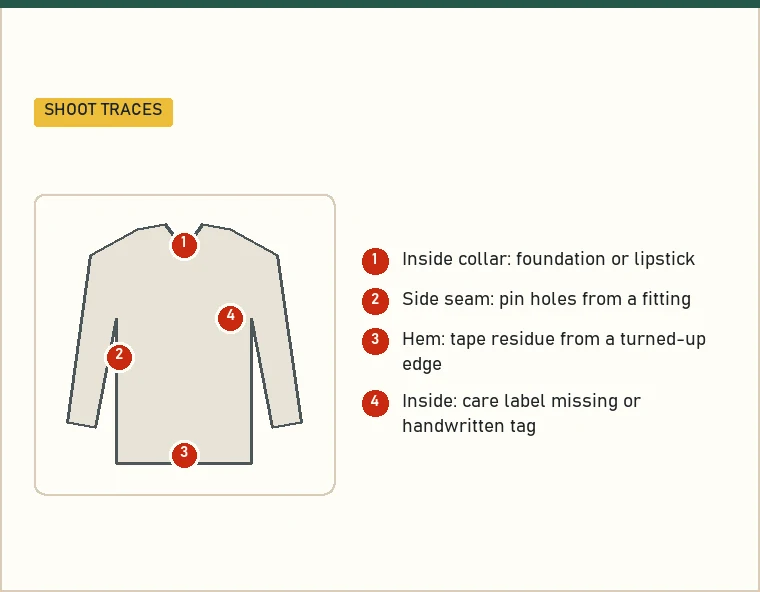
Shoot wear is light but specific. Foundation and lipstick marks sit inside the collar and on the front of a hood. Pin holes sit along seams where a garment was taken in on the model. Tape residue sits at hems that were turned up for the camera. Chalk lines sit where a pattern maker marked an alteration. Steaming between takes can leave a shine on dark cloth.
Showroom wear is more like display wear: dust on shoulders, a stretched neck from hangers, creases from being folded and refolded. Some samples also carry a tag stamped 样衣 or a handwritten code, and many have no care label, because care labels are often sewn in only at production.
None of these marks has to be a dealbreaker. They are simply the reason a sample sells for less, and they are worth seeing in a photo of the unit you will receive rather than in the clean production images further up the page.
Not the same word as a cosmetics sample
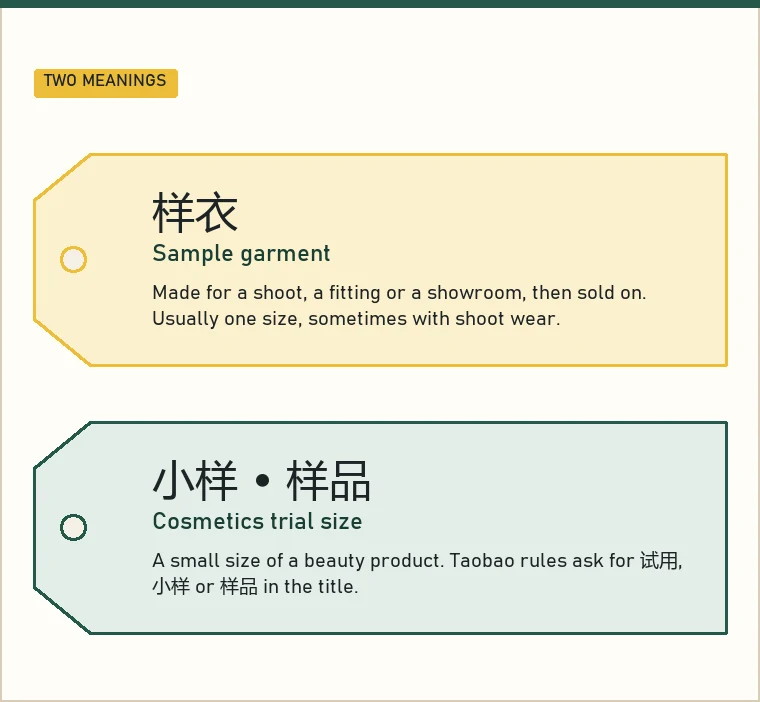
The English word sample covers two very different Chinese ideas, and listings can mix them up in translation. 样衣 is a sample garment. 样品, 小样 and 试用装 on beauty listings mean trial sizes: small bottles and sachets of a product that is otherwise sold in full size.
Taobao's cosmetics rules are explicit about the second kind. Its industry rule for cosmetics, dated 24 February 2017 in the rules centre, says that when a seller publishes a sample, the title must make it clear with words such as 试用, 小样 or 样品. That is a rule about size and labelling, not about handling. A search of the same rules centre for 样衣 on 19 October 2026 returned no rule text at all.
So if a translated listing for a jacket says "sample", check the Chinese title. 样衣 means the garment was used; anything with 小样 belongs to a different shelf altogether.
Questions before buying a sample
Ask whether the sample was worn on a shoot or only fitted, whether it differs from the production version in cloth or trims, what it measures (rather than what the label says), and whether there are pins, marks or missing labels. A seller who sends a photo of the inside of the collar has answered the most useful question before you asked it.
When the CNFans warehouse photos arrive, compare them with those answers rather than with the production photos on the listing. A sample that matches what the seller told you about it is a correct delivery, even if it does not match the polished images.
Previous label: Broken sizesNext label: Display and shop-floor